
Understanding Tax Credits – Solar
Lecker, Martin. “What to know about residential solar” 7-8 September, 2025.
Interview with Pat Consolati
Excerpt from The Berkshire Eagle
“You must purchase the system to claim the credit.
Financing is tax deductible, but leasing is not.”
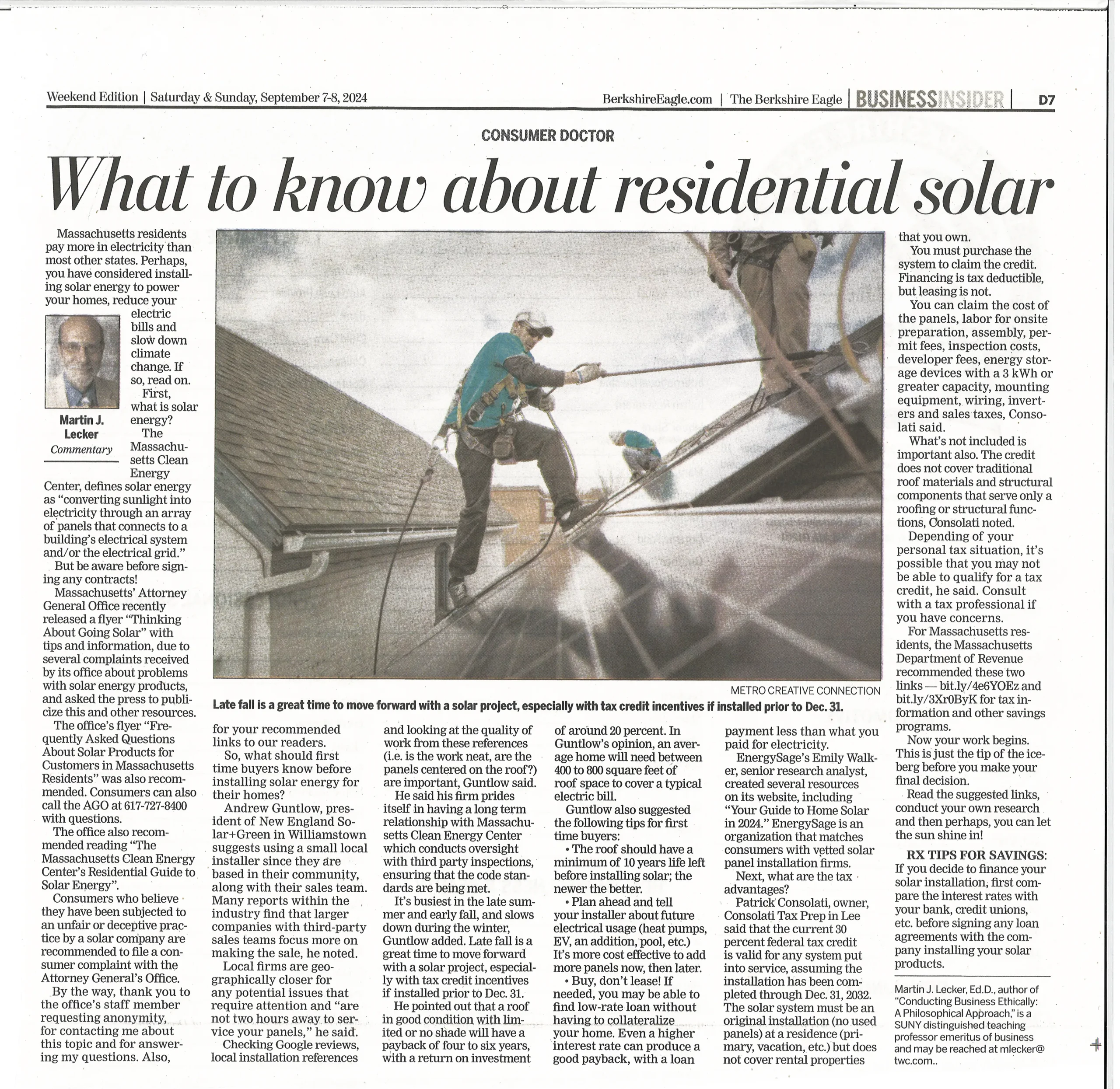
TIPS FOR UNDERSTANDING WHAT IS AND WHAT’S NOT COVERED IN THE TAX CREDIT
Next, what are the tax advantages?
Patrick Consolati, owner, Consolati Tax Prep in Lee said that the current 30 percent federal tax credit is valid for any system put into service, assuming the installation has been completed through Dec. 31, 2032. The solar system must be an original installation (no used panels) at a residence (primary, vacation. etc.) but does not cover rental properties – that you own.
You must purchase the system to claim the credit. Financing is tax deductible, but leasing is not.
You can claim the cost of the panels, labor for onsite preparation assembly, permit fees. inspection costs, developer fees, energy storage devices with a 3 kWh or greater capacity, mounting equipment, wiring, inverters and sales taxes, Consolati said.
What’s not included is important also. The credit does not cover traditional roof materials and structural components that serve only a roofing or structural functions Consolati noted.
Depending of your personal tax situation, it’s possible that you may not be able to qualify for a tax credit, he said. Consult with a tax professional if you have concerns.
TIPS FOR UNDERSTANDING WHAT IS AND WHAT’S NOT COVERED IN THE TAX CREDIT
Next, what are the tax advantages?
Patrick Consolati, owner, Consolati Tax Prep in Lee said that the current 30 percent federal tax credit is valid for any system put into service, assuming the installation has been completed through Dec. 31, 2032. The solar system must be an original installation (no used panels) at a residence (primary, vacation. etc.) but does not cover rental properties – that you own.
You must purchase the system to claim the credit. Financing is tax deductible, but leasing is not.
You can claim the cost of the panels, labor for onsite preparation assembly, permit fees. inspection costs, developer fees, energy storage devices with a 3 kWh or greater capacity, mounting equipment, wiring, inverters and sales taxes, Consolati said.
What’s not included is important also. The credit does not cover traditional roof materials and structural components that serve only a roofing or structural functions Consolati noted.
Depending of your personal tax situation, it’s possible that you may not be able to qualify for a tax credit, he said. Consult with a tax professional if you have concerns.